What Is Breathwork?
And What Does Science Say About It?
Breathwork represents the deliberate practice of employing controlled respiratory exercises to cultivate enhanced well-being.
Breathwork encompasses a range of techniques wherein you intentionally modulate your respiratory rhythms to nourish both psychological and somatic health. Spanning from time-honored yogic pranayama traditions to contemporary anxiety-reduction protocols, breathwork captures any conscious breathing methodology oriented toward amplifying wellness outcomes. Scientific inquiry has lately begun validating numerous such practices. Something as elementary as our breathing mechanics can exert profound influence upon corporeal and cerebral functioning.
Studies reveal that breathwork possesses capacity to activate the organism’s relaxation cascade, diminishing stress hormones while simultaneously depressing blood pressure metrics[1]. Through harnessing respiratory control, individuals acquire a portable, pharmaceutical-free instrument for soothing neural agitation, honing attentional clarity, and elevating emotional states.
Imagine a method that calms you down before an important presentation. Or fall into a relaxed sleep when you would normally be worried about what is going to happen the next day. That’s what breathwork can help you with.

How Controlled Breathing Affects the Body
During periods of stress or anxious arousal, respiration transforms into something rapid and superficial. This constitutes a hallmark of the “fight-or-flight” cascade orchestrated by sympathetic nervous architecture[2].
Paradoxically, such hurried, chaotic breathing feeds backward into our anxiety reservoir, maintaining somatic hypervigilance. Breathwork interrupts this feedback loop. Conscious deceleration and deepening of respiratory cycles enables practitioners to stimulate parasympathetic nervous infrastructure (colloquially termed the “rest and digest” neural branch), thereby transitioning the organism toward tranquil states[3][4].
In physiological vocabulary, protracted and controlled respiration (particularly patterns emphasizing elongated exhalation phases) activates vagal nerve pathways. This slackens cardiac tempo and telegraphs relaxation signals throughout bodily systems[5][6]. Breath functions essentially as a biological remote control: accelerate respiration and tension proliferates; decelerate rhythms and serenity emerges.
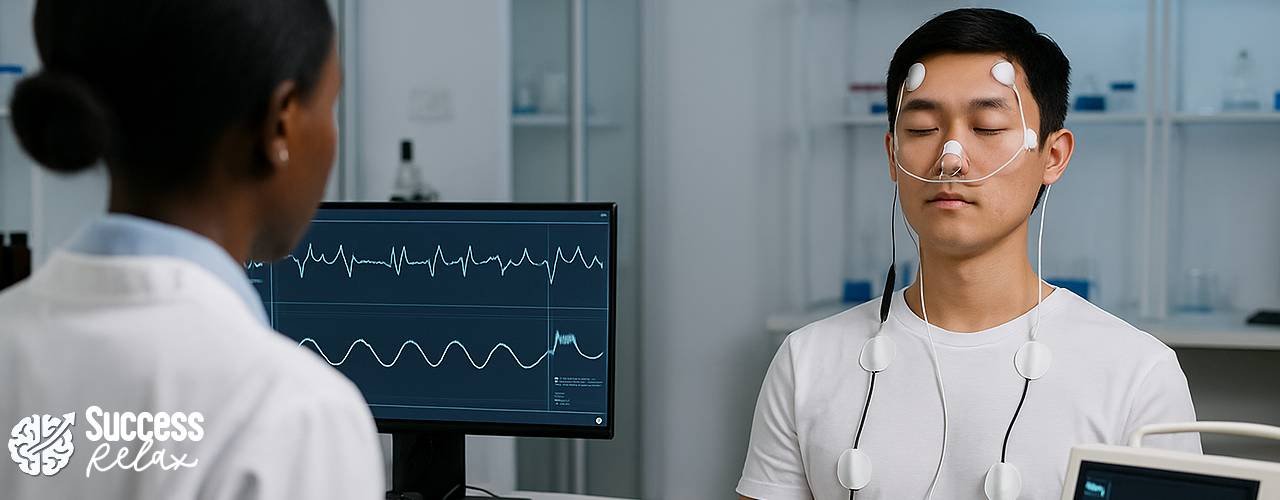
Heart rate variability (HRV) offers one quantifiable metric through which respiration impacts physiology. HRV represents the wholesome fluctuation in temporal intervals separating consecutive heartbeats. Elevated HRV correlates with relaxation capacity and stress resilience. Investigations demonstrate that leisurely respiration approximating five to six breath cycles per minute (terminology includes resonance breathing or coherent breathing patterns) can spectacularly amplify HRV. Improvements reach magnitudes approaching tenfold enhancement[7]. Breathing at this optimally decelerated cadence can therefore cultivate a more placid physiological baseline.
Respiratory practices demonstrably augment parasympathetic (calming) neural activity. Concurrently, they suppress excessive sympathetic (stress-oriented) activation[8][9]. Evidence even suggests respiratory rhythmicity influences cerebral regions and neural oscillations connected to affective processing and cognitive operations[10]. This furnishes plausible explanation for breathwork’s capacity to refine mental concentration and mood architecture.
Controlled respiration ultimately serves as a conduit bridging somatic and psychological domains. Unlike numerous autonomic processes, voluntary modulation of breath remains feasible. This grants practitioners potent leverage for regulating internal physiological terrain[11]. Such intervention directly penetrates stress response machinery, communicating to brain and body that deceleration, relaxation, and homeostatic rebalancing are permissible courses of action.
Science-Backed Benefits of Breathwork
Contemporary empirical inquiry has progressively substantiated breathwork’s advantages across diverse mental and physical health dimensions. What follows are several key science-corroborated benefits associated with respiratory practice:
Diminishes Stress and Anxious States: A multitude of investigations confirm respiratory exercises’ capacity to meaningfully attenuate stress intensity and anxiety manifestations. One recent systematic literature review examining clinical trials revealed that seventy-five percent of assessed breathing interventions succeeded in reducing participants’ self-reported stress or anxiety metrics[12]. The unifying element among efficacious techniques involved leisurely or rhythmic respiratory patterning sustained for minimally five-minute sessions[13]. Through activating the organism’s relaxation response cascade, breathwork depresses physiological stress biomarkers. For illustration, one meta-analytic synthesis observed that individuals practicing decelerated breathing exhibited substantially diminished cortisol concentrations (cortisol being the predominant stress hormone) relative to non-practitioners[14]. Even brief minutes of deep respiratory engagement can quell “fight or flight” activation and generate measurable serenity sensations[5].
Elevates Mood and Emotional Equilibrium: Transcending mere anxiety reduction, breathwork can genuinely amplify positive affective states and holistic mood architecture. A 2023 randomized investigation conducted at Stanford revealed that merely five daily minutes of breathwork yielded superior mood improvements (escalations in positive sensations such as tranquility and contentment) compared with equivalent durations of mindfulness meditation practice[15][16]. All participants engaging in controlled respiration reported decreased anxiety and negative affectivity. However, the cohort concentrating on extended exhalation patterns (a technique designated cyclic sighing) exhibited maximal positive mood gains across four weeks[16]. This pattern suggests breathwork transcends stress mitigation alone. It can actively cultivate flourishing emotional experiences. Additional investigations of breathing-centered programs have similarly documented depression reductions alongside emotional balance improvements[17]. Succinctly stated, regular breathwork engagement may render practitioners less anxious while simultaneously more elevated in quotidian existence.
Amplifies Focus and Cognitive Capability: Intriguingly, respiratory exercises may confer cognitive advantages as well. Deliberate, diaphragmatic respiration has demonstrated capacity to enhance attentional metrics and executive function performance. Within one investigation, healthy adults receiving deep belly breathing training across eight weeks manifested superior sustained attention on cognitive assessments compared to pre-training baselines. A control cohort meanwhile exhibited no alteration[18]. That breathing group additionally reported heightened focus acuity and diminished mental exhaustion following practice sessions. Comparably, a four-week trial examining resonance breathing (six breaths per minute) in young adults discovered substantial improvements in cognitive flexibility task performance. This occurred alongside reduced perceived stress[19][8]. Such enhancements likely connect to breathwork’s calming and balancing influence upon cerebral arousal architecture. By suppressing stress signaling and augmenting oxygenation, neural tissue can operate with enhanced lucidity. Elite performers recognize this principle. The U.S. Navy SEALs, for instance, employ breathing techniques such as box breathing to maintain mental sharpness and focused presence under duress[20][21].
Depresses Blood Pressure and Fortifies Cardiac Health: Physiological transformations stemming from controlled respiration can yield cardiovascular benefits as well. Deliberate deep breathing tends to depress both blood pressure readings and cardiac tempo through relaxing vascular structures and enhancing vagal tone. Medical institutions note that breath regulation methodologies assist in reducing blood pressure. Clinical research substantiates this observation[1]. One investigation published in the Journal of the American Heart Association demonstrated that a particular resisted breathing exercise diminished systolic blood pressure by approximately nine mmHg on average. This effect parallels certain pharmaceutical interventions, yet emerges simply through daily respiratory practice[22]. Regular breathwork may additionally improve heart rate variability (as previously discussed). This metric links to diminished cardiovascular pathology risk. Essentially, investing several minutes daily in slowed breathing grants the heart respite from stress-propelled pounding. It permits cardiac tissue to beat in more variable, salutary rhythms[23].
Suppresses Stress Hormone Circulation: Breathwork’s hormonal impact constitutes another noteworthy advantage. Profound respiration triggers neurotransmitter release (acetylcholine among others) that antagonizes adrenaline and cortisol. A systematic review focusing on diaphragmatic breathing discovered that consistent practice precipitates meaningful cortisol level decrements. Put plainly, the organism literally circulates fewer stress biochemicals[24]. Reduced cortisol not only engenders calmer subjective states but can ameliorate multitudinous health dimensions (ranging from improved sleep quality to fortified immune function). Conversely, extremely accelerated respiration or hyperventilation can transiently elevate cortisol. Yet even under such circumstances, research identifies swifter baseline return once respiratory exercises cease[25]. The preponderance of evidence strongly indicates that leisurely breathing maintains stress hormones within checked parameters. This contributes to a cascade of positive downstream effects.
Facilitates Pain Management and Sleep Quality: Numerous individuals report that respiratory techniques assist with pain alleviation and sleep architecture quality. Emerging investigations lend credence to these claims. Measured, controlled respiration constitutes a well-documented instrument in pain management contexts. It assists in redirecting attentional focus, releasing muscular tension, and activating parasympathetic responses that counteract pain-associated stress[26]. Therapists routinely instruct breathwork to patients navigating chronic pain or PTSD presentations to diminish pain perception and anxious arousal. Concerning sleep, respiratory exercises (including the widely-known 4-7-8 technique) frequently receive recommendations from integrative medicine specialists as a pathway toward accelerated sleep onset. While formal sleep research continues developing, one clinical trial identified that eight weeks of nocturnal breathing training substantially improved sleep quality in adults experiencing insomnia, relative to control conditions. Even absent specific study evidence, intuitive sense prevails: engaging in slow, rhythmic respiration prior to bedtime calms nervous system infrastructure and primes the organism for restorative rest. Many practitioners discover that merely one or two minutes of breath-focused attention in bed can quiet racing cognition and ease transitions into sleep states.
Accessible and Devoid of Adverse Effects: Crucially, breathwork presents minimal learning barriers, remains accessible to nearly everyone, and costs essentially nothing. No pharmaceutical agents or expensive apparatus are required. Merely functional lungs and several minutes of temporal investment. Consequently, researchers spotlight breathwork as a promising adjunctive or alternative approach to conventional stress treatments. Unlike certain therapeutic interventions or pharmaceutical compounds, the “dosage” of breathing can be self-administered anywhere and anytime. Zero adverse effects manifest. Even a five-minute respiratory interlude at your workspace or within your vehicle can yield benefits. Across time, regular practice apparently rewires stress response architecture. As one Cleveland Clinic physician articulates, nervous system infrastructure demonstrates plasticity. Consistent breathwork can therefore train the organism to manifest diminished reactivity toward stressors generally[27]. For these accumulated reasons, experts regard breathwork as a low-risk, high-yield wellness strategy that anyone can incorporate into their personal toolkit[28].

Notable Breathwork Techniques (and What Science Says)
Breathwork manifests in abundant forms and variations. What follows are several popular respiratory techniques (multiple versions feature within the SuccessRelax app) accompanied by explanations of their mechanisms and corroborating evidence regarding their benefits:
Box Breathing (4-4-4-4)
Alternatively termed four-square breathing or sama vritti pranayama (Sanskrit for “equal breath”)[20], box breathing entails inhaling across four counts, retaining breath for four, exhaling across four, and holding once more for four. This generates a “square” configuration of equivalent temporal segments. Functional mechanism: Box breathing constitutes a straightforward yet potent method for decelerating respiration and concentrating mental attention. The methodical pattern coupled with brief breath suspensions temporarily elevates CO2 concentrations in blood, which stimulates vagal nerve pathways. This can depress cardiac tempo, transitioning practitioners into more placid states[29]. Evidence base: This technique famously sees employment by Navy SEALs for maintaining composure and alertness in high-stress circumstances[20]. It receives common instruction for anxiety mitigation. Research demonstrates that regulated respiration of this nature can lower cortisol levels (the stress hormone) and even assist in reducing blood pressure[1]. A recent 2023 investigation that incorporated box breathing among several daily exercises identified that five daily minutes of such breathwork substantially reduced anxiety while improving mood across one month[15]. Box breathing’s emphasis on equal, rhythmic breath cycles additionally renders it a mindfulness form. The counting functions as a mantra capable of quieting racing cognitive content[30]. It represents an excellent multipurpose technique for stress reduction and mental focus cultivation.

4-7-8 Breathing
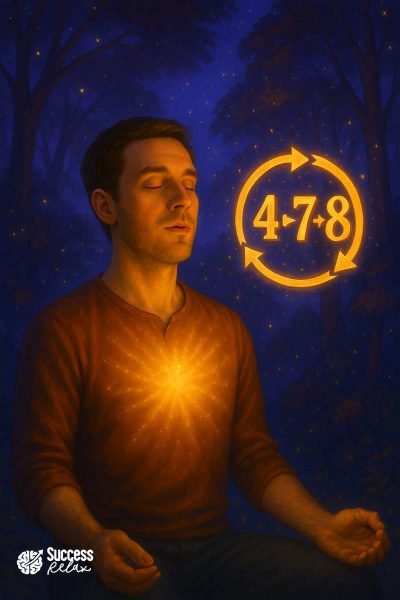
Dr. Andrew Weil popularized this technique, occasionally termed the “relaxing breath.” It involves inhaling for four counts, retaining breath for seven, and exhaling for eight counts (typically through the mouth). Functional mechanism: The 4-7-8 pattern exaggerates the exhalation phase (rendering it twice the inhalation duration) while incorporating breath retention. Both elements assist in maximizing carbon dioxide levels and activating parasympathetic responses. Many practitioners find this technique particularly sleep-inducing. It can quiet overactive cognition at bedtime. Evidence base: While formal 4-7-8 research remains somewhat limited, early investigations prove encouraging. For illustration, a 2022 clinical trial discovered that surgical patients receiving 4-7-8 breathing instruction manifested substantially lower post-surgery anxiety levels relative to control groups[31]. The 4-7-8 practitioners recovered calm sensations more rapidly than even those performing simpler deep breathing. Physiologically, the extended eight-count exhalation in this methodology is theorized to facilitate enhanced CO2 release and decelerate cardiac tempo, thereby encouraging relaxation[6]. Anecdotally, thousands of practitioners vouch for 4-7-8 breathing’s capacity to reduce anxious sensations and improve sleep. It presents minimal difficulty to attempt whenever stress feelings arise. Merely a few cycles can generate palpable calming effects.
Coherent Breathing (5-5) / Resonance Breathing (approximately 6 breaths/minute)
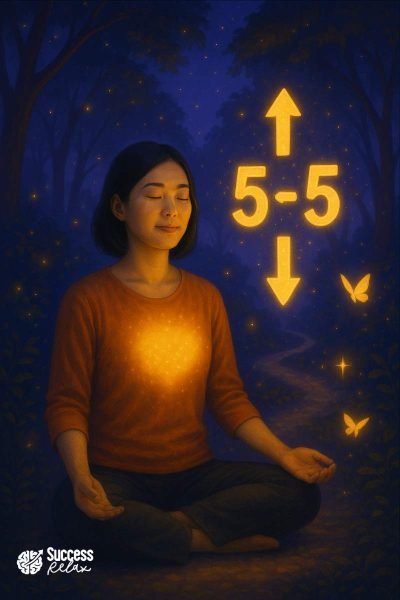
“Coherent” or resonance breathing designates maintaining equivalent inhalation and exhalation durations of approximately five seconds each. This yields roughly five to six breath cycles per minute. (Some variants employ six-second inhalation, six-second exhalation for precisely five breaths per minute.) Functional mechanism: Breathing at this deliberately slowed, steady cadence is believed to align or “resonate” with the organism’s cardiovascular rhythmicity. It maximizes something designated respiratory sinus arrhythmia (the natural cardiac tempo oscillation accompanying each breath cycle). This in turn amplifies heart rate variability and vagal tone. Essentially, resonance breathing positions practitioners in peak autonomic equilibrium states. Evidence base: This ranks among the most scientifically validated breathwork methodologies. Research demonstrates that breathing around six cycles per minute increases HRV dramatically (approaching tenfold)[7] while optimizing baroreflex mechanisms that stabilize blood pressure[32]. In one randomized investigation, young adults practicing twenty daily minutes of resonance breathing for four weeks manifested substantial improvements across multiple HRV metrics and reported stress levels compared to controls[19][8]. They additionally performed superiorly on cognitive assessments, suggesting enhanced focus capacity. Other investigations have identified benefits including reduced anxiety and fatigue when employing six-breaths-per-minute techniques in clinical populations. In practice, coherent breathing feels profoundly relaxing. Many practitioners sense a distinctive “internal rhythm” rendering this pattern especially soothing. It receives frequent employment in HRV biofeedback therapy contexts and constitutes a core component of certain yoga and meditation breathing practices. If you seek a dependable pathway toward entering calm and centered states, coherent or resonance breathing represents a premier choice.
Diaphragmatic (Belly) Breathing
Also simply termed deep abdominal breathing, this technique prioritizes fully engaging the diaphragm (the primary respiration muscle) such that the belly expands during each inhalation and contracts during exhalation. (Often practitioners position a hand on the abdomen to ensure proper rising and falling motions.) Functional mechanism: Belly breathing encourages more efficient and profound respiration, utilizing the diaphragm rather than superficial chest breathing. This not only draws augmented air volumes into pulmonary tissue but also tends to decelerate breathing rate while preventing hyperventilation. It associates closely with activating parasympathetic nervous infrastructure. When the diaphragm descends during inhalation, it stimulates vagal nerves in the abdominal region, thereby promoting relaxation. Evidence base: Diaphragmatic breathing enjoys widespread study and demonstrates calming, stress-reducing effects. A quantitative literature review concluded that diaphragmatic breathing practice can meaningfully reduce anxiety and stress biomarkers while improving attentional levels and cortisol regulation[24]. In one experiment, participants completing twenty belly breathing sessions across eight weeks manifested lower resting cortisol, diminished negative affectivity, and superior focused attention relative to control cohorts[18]. This aligns with numerous other reports indicating deep abdominal breathing reduces sympathetic (“fight or flight”) activity. Supplementary research has identified that belly breathing can depress blood pressure, improve oxygenation, and even assist in managing conditions such as IBS and PTSD through calming autonomic nervous architecture[33]. For beginners, belly breathing often receives instruction first because it remains simple yet establishes foundational principles of slow, deep respiratory cycles. If you feel “breathless” from anxiety or discover yourself engaging in chest-breathing, transitioning to diaphragmatic breathing can constitute a rapid pathway toward regaining calm.
4-6 Breathing (Extended Exhale)
This constitutes a straightforward exercise wherein practitioners inhale for four counts and exhale for six counts. Any comparable ratio (approximately 1:1.5) where exhalation surpasses inhalation duration qualifies. It essentially represents a gentler version of extended-exhale principles without breath retention. Functional mechanism: The objective involves gently lengthening exhalation, which generates immediate calming effects. The protracted exhale slightly increases CO2 levels and engages parasympathetic responses. It additionally assists in more completely emptying pulmonary tissue, which can release physical tension. Evidence base: The scientific basis behind extended exhalations ties closely to vagal activation. Experts note that rendering your exhalation merely 1.5 to 2 times longer than your inhalation suffices to stimulate vagal nerve pathways and lower cardiac tempo along with blood pressure[6]. Many breathwork protocols for anxiety employ extended exhale formatting (for instance, “breathe in for 4, out for 8” represents a common calming pattern). While 4-6 breathing specifically hasn’t received isolated research attention, it falls beneath the umbrella of paced breathing techniques that have proven efficacious. For instance, a meta-review highlighted that slow paced breathwork (often incorporating longer exhalations) precipitated stress reductions and even lowered basal cortisol levels[14]. If 4-7-8 or other breath-holding patterns feel challenging, a 4-6 rhythm can provide an accessible pathway toward beginning to harvest longer exhale benefits. It constitutes an excellent “quick remedy” for acute stress. Next time you’re experiencing overwhelm, attempt several cycles of 4 in, 6 out, and observe tension dissipating.
Equal Breathing (Sama Vritti)
In yogic traditions, sama vritti signifies “equal fluctuations” and designates making inhalation and exhalation equivalent in duration. For illustration, you might breathe in for five counts and out for five counts. Sometimes a brief pause interposes between phases. (Box breathing actually constitutes a form of equal breathing that additionally incorporates equal breath retentions.) Functional mechanism: Equal breathing establishes steady, balanced respiratory rhythmicity. This symmetry can prove profoundly soothing for nervous system infrastructure. It creates a consistent cadence resembling gentle rocking motions. It additionally compels you to decelerate if your natural breathing proves shorter. You must extend either inhalation or exhalation to match the opposing phase. Evidence base: Equal breathing has received less formal isolated study. However, it shares elements with both slow breathing and mindfulness meditation. By concentrating on matching your inhalation to your exhalation, you naturally cultivate greater breath mindfulness. This can quiet mental chatter. In fact, the elementary act of counting breath cycles (as performed in sama vritti) represents a recognized meditation technique that reduces anxiety[30]. Physiologically, equal breath patterns approximating four to six seconds per phase will fall within that beneficial range of five to six breaths per minute. Thereby enhancing heart coherence and HRV similarly to resonance breathing. Practitioners frequently report that equal breathing imparts a sense of inner stability. It constitutes a balanced practice capable of steadying racing minds. Because it remains gentle and doesn’t involve extended retentions, sama vritti proves accessible to beginners. It can be performed virtually anywhere (even in meetings or classes, counting silently). It represents an excellent recourse if you need quick centering or if uneven breath holds (such as 4-7-8) feel uncomfortable.
Extended Exhale Techniques (1:2 Ratio)
This category encompasses any respiratory exercise wherein exhalation approximates twice the inhalation duration. We’ve touched upon several already (4-6, 4-7-8). However, many variants exist: for example, inhale 3 seconds, exhale 6; inhale 5, exhale 10, and so forth. Functional mechanism: An authentic 1:2 ratio magnifies exhalation’s calming effects. It maximizes brief carbon dioxide retention, which triggers baroreceptors that decelerate cardiac tempo. Elongated exhalations additionally promote complete pulmonary ventilation. This can feel especially relieving during anxious states (when we tend toward hyperventilation). Evidence base: Across divergent breathing traditions, consensus emerges that “exhale emphasis” equals relaxation. Scientific explanations point toward parasympathetic rebound occurring during exhalation. Essentially, cardiac tempo naturally drops when you breathe out. Therefore prolonging that phase extends the drop[5]. One clinical experiment comparing various breathing cadences identified that those with elongated exhalations produced greater increases in vagal activity and calmness among participants. This was measured via heart rate changes and self-reported relaxation. Additionally, psychologists often instruct extended-exhale breathing to patients with panic disorder presentations. It helps prevent rapid over-breathing that can precipitate lightheadedness. The extended exhale embeds within the “physiological sigh” (see subsequent section) and many yoga pranayama techniques for sound reason. It represents one of the swiftest pathways for signaling your organism to settle down. When practicing a 1:2 breathing ratio, remaining comfortable proves important. If an exact double-length exhale feels too protracted, simply aim for “longer out than in.” You should still acquire the benefit.
Physiological Sigh (Double Inhale, Long Exhale)
The physiological sigh constitutes a natural breathing pattern humans (and numerous animal species) perform spontaneously. Often this occurs after crying or during elevated stress. It involves two rapid inhales through nasal passages, followed by a slow, extended exhale through the mouth. As a deliberate exercise, it sometimes receives designation as cyclic sighing. Functional mechanism: That second inhalation serves to fully inflate pulmonary tissue (reopening alveoli that may have collapsed) and “stack” additional air volume. This increases oxygen absorption. The subsequent elongated exhale then expels maximal CO2 quantities. This combination proves incredibly effective at rebalancing gases in bloodstream and calming autonomic nervous architecture. Essentially, it resembles hitting a reset button on a stressed-out respiratory system. Evidence base: Recent Stanford research has spotlighted the physiological sigh as a potent anxiety-reduction instrument. In their 2023 investigation, participants practicing cyclic sighing for five daily minutes manifested the greatest mood improvement and anxiety reduction among several breathing techniques tested[16]. Even compared with traditional mindfulness meditation, the physiological sigh group reported larger boosts in positive feelings and greater calm energy sensations[15][16]. Moreover, these participants substantially lowered their resting breathing rates across one month. This signifies they were breathing more slowly even when not actively performing the exercise. This correlated with feeling calmer overall[34][35]. The study co-author Dr. Andrew Huberman noted that merely one or two physiological sighs can induce noticeable calm on the spot[36]. Exhaling slowly following the double inhalation appears to rapidly engage parasympathetic systems, decelerating cardiac tempo and relaxing corporeal structures[5]. The physiological sigh thus represents an excellent acute stress strategy. If you’re experiencing panicky or overwhelmed sensations, taking a couple of these double inhale plus long exhale breaths can assist in regaining composure within under one minute. It proves remarkable that our organism naturally recognizes this maneuver (people often sigh deeply as a reflexive means of relieving stress). Now we can apply it intentionally for amplified benefit.
References and Further Reading
- Harvard Gazette – Eight weeks to a better brain
- Harvard Gazette – How mindfulness may bring about depression relief
- Harvard Gazette – Meditation found to increase brain size
- Scientific American – What Does Mindfulness Meditation Do to Your Brain?
- UW–Madison News – How meditation changes brain and body
- Nature / Scientific Reports – Yang et al. (2019): Eight-week meditation program changes in the brain
- Psychology Today – Mindfulness: 8 Weeks Didn’t Change Brains – and Why That’s OK
- SuccessRelax – Success Related Meditation App for iOS and Android